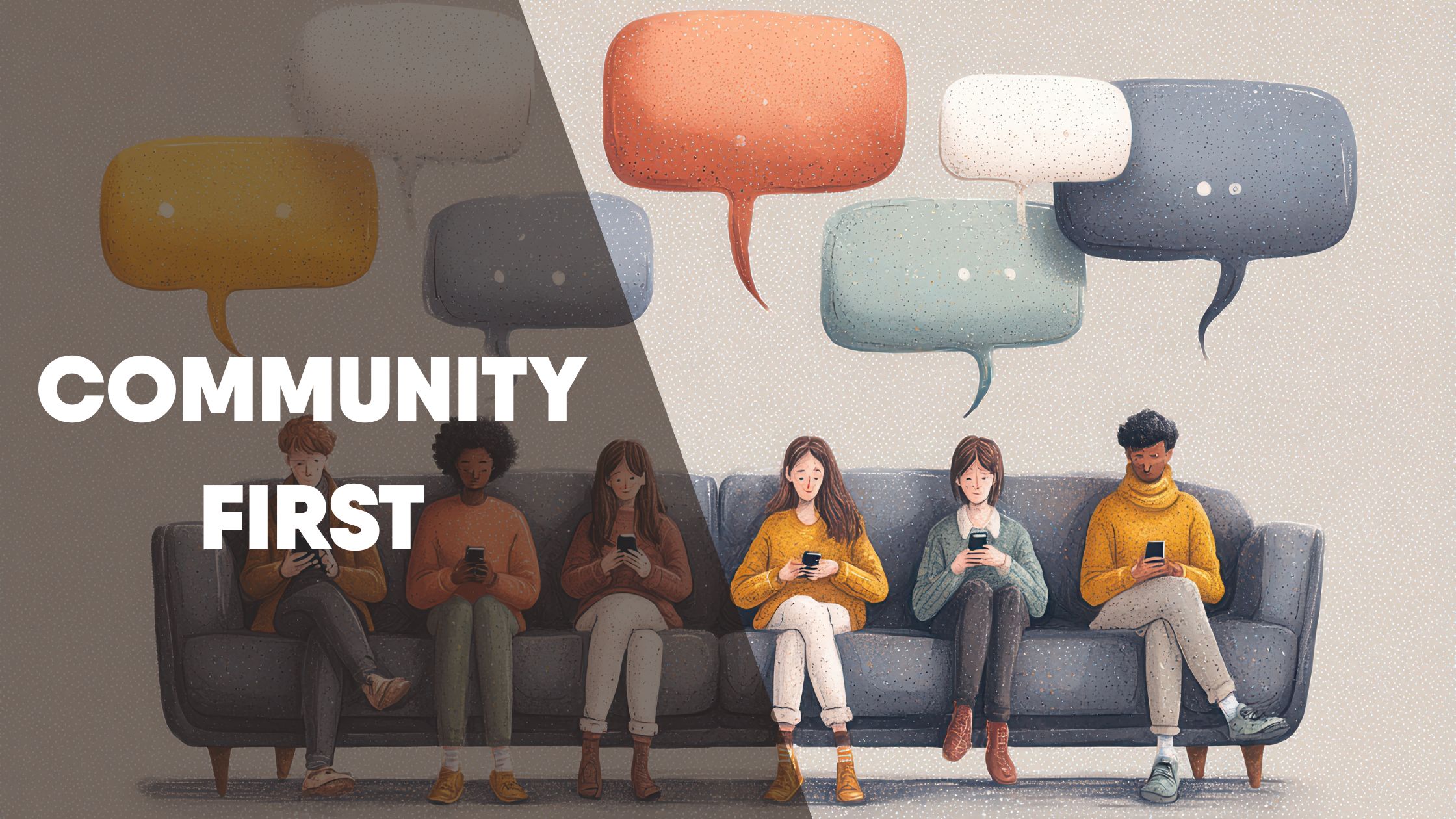
Creating an engaged community might be your brand’s most powerful growth strategy to date!
The brands that are enjoying the biggest wins in 2026 are not those with the largest companies behind them, the biggest ad budgets, or the loudest voices. Instead, they are those brands that genuinely value their customers/clients as people and treat them like collaborators as opposed to just another nameless, faceless sale.
KEY INSIGHTS
- Community-led growth is replacing traditional brand control, as consumers now shape brand perception via reviews, testimonials, content-sharing, and conversations online.
- Brand success today requires ongoing customer nurturing and engagement, and the use of a self-sustaining “flywheel” cycle as opposed to the traditional “sales funnel”.
- Fostering genuine human connection provides a major competitive advantage for brands and businesses of all sizes – and brand micro-communities can exploit these benefits to great effect.
The Demise of Traditional Brand Control
Brands traditionally sought complete control over all messaging related to their identity and offering. Messaging was cautiously managed, polished, and approved, with an impervious “veneer” between the brand and consumers. Communicating was all about one-way broadcasting and speaking at audiences as opposed to with them.
Reach alone is no longer enough to guarantee conversions and sustain customer loyalty.
The way people relate to brands has fundamentally changed. In this era of social media and the World Wide Web, human connection has never been more important for brands, and the shift from a focus on audience-building to community-building is now prevalent across all industries.
Conversations about brands and their offerings occur whether the brand is involved or not; reviews, opinions, real-world experiences, and feedback, both positive and negative, solicited or unsolicited, are often public and, especially if critical, can quickly go viral.
“Funnel versus Flywheel”
The “funnel” is a metaphor for the traditional buyer journey, whereby linear steps are followed:
- awareness
- discovery
- evaluation
- engagement
- conversion
- loyalty
- advocacy
The way consumers interact with brands and the buying process has evolved, and the customer journey is no longer necessarily linear; nor does it have a defined endpoint. Leads must be nurtured beyond conversion, and advocacy can occur before conversion has even been actively considered.
The customer-led growth cycle is metaphorically referred to as the “flywheel”:
- awareness -> consumer becomes aware of the brand
- consideration -> brand nurtures the prospect by distinguishing itself
- post-sale -> brand demonstrates value and provides networking opportunities
- advocacy -> customer advocates for the brand, recommending it to their peers. The cycle restarts.
Community is intrinsic to the human experience – we all need connection. Successful brands in 2026 don’t try to silence conversations, but instead encourage them, lean into them, and participate in them.
What is Community-Led Growth?
No matter whether your brand has just a handful of customers or millions, you have a community. These are the people who like what you do and are most likely to share their experience of it.
Community-led growth is a form of marketing that empowers and places your brand’s customers and fans in a position to share their appreciation or even passion for your brand with their peers. It transforms consumers into advocates.
Community-led brands appreciate that lasting, robust customer loyalty is built via active participation. A great brand community is an intentional place where members feel seen, heard, included, valued, and supported. It’s so much more than a group chat!
Community-led brands win as:
- Customers feel a sense of belonging
- Customers become brand collaborators and advocates
- Customer retention rates rise
- Costs for customer acquisition (ads) drop
- Insights are available in real-time
Community builds trust. It humanises a brand, signifies transparency and integrity, and empowers customers.
How Do Communities Build Loyalty?
Consumers are people – and people trust brands more when they are transparently “real people”. Marketers and business owners report that brands with active, engaged communities drive more referrals, enjoy higher dwell times, and boost loyalty. It creates a network of influential customers and brand advocates who are enthusiastic and engaged, and who feel compelled to share their own experiences and opinions with like-minded others.
Consumers become storytellers.
Comment sections become conversations.
Feedback shapes future brand direction and decisions.
Types of Online Communities
- Learning/knowledge communities
- Event communities
- Brand communities
- Action communities
- Membership communities
- Advisory/expert networks
These may include private Facebook Groups, member-only chats/forums, live virtual events, Slack channels, active comment sections (social media posts, blogs, etc).
Building and nurturing a brand community is a social contract. Brands must be committed to their community, invest time and energy, and take their community with them on their brand’s evolutionary journey.
How Do Brands Use Micro-Communities to Drive Growth and Loyalty?
These brands unite people around a topic, brand, or product, and avail themselves of their community members when they:
- Promote and recommend products to their peers.
- Come together online to share content, success stories, experiences, best practices, how-tos, and discussions that drive engagement.
- Give feedback about products, services, customer care, or marketing strategies.
Start Your Own Brand Micro-Community
- Choose a platform or channel your target audience already uses.
- Define a clear purpose for your community (e.g., support, provide feedback, inspire, motivate).
- Engage actively and consistently.
- Encourage and celebrate your members.
- Allow conversations to be led by your community members.
- Invite members to participate, make suggestions, share content, vote on polls, join contests, etc.
Tracking Results
How is success in community-led marketing measured[1]?
- Engagement – which signals relevance.
- Retention – when community members remain connected, it indicates advocacy and tends to be reflected in conversions.
- User-Generated Content – brand stories and content shared outside the community.
- Conversions – sales and revenue growth indicate receptiveness and the effectiveness of the community as a marketing strategy.
A Few Final Considerations
- Smaller businesses particularly thrive when it comes to community-led marketing, understanding and exploiting its value as a tool for driving new ideas, advocacy, leads, and revenue. The key to success is in genuine human engagement; this is often easier to deliver for businesses with micro-communities of legitimately captivated and active participants.
For example, 80% of startups now invest in community as a primary marketing strategy[2], and its importance to their success can’t be understated.
- Consider how influencer marketing has evolved over the past decade. Content creators built their own audiences, and brands partnered with them to exploit their influence over a target audience. This was originally a one-way communication model. Today, this audience has been shifted into two-way communication communities, and these have unparalleled power to propel brand engagement and loyalty.
- Sales, bookings, reservations, donations: while these are the ultimate goals of all marketing, overselling is the single biggest contributor to existing community decline. Community participation and retention require that you not use the forum for hard selling; rather, show your participants who you are as a brand and how you provide them with value and a sense of belonging. These are what drive engagement and ultimately brand loyalty and conversions.
- Refreshingly, although the world is increasingly saturated with AI, the push from consumers for genuine human connection dominates. Moreover, growing numbers of consumers are pushing back more against the preponderance of AI that feels like it is seeping into every aspect of our lives. They don’t want chatbots or generic, soulless interactions, but to engage with real people, in real time, in real human ways. This indicates that community-led marketing is here to stay – and will continue to flourish.
Book a Strategy Session Now!
Whether for B2B or B2C, your business can’t ignore the need to foster real connections and conversations to drive conversions and brand loyalty. From insights into how a community-first social media strategy could work for you, to other effective, high-ROI marketing strategies, we are here to help you join the dots and win.
Are you ready to win via your own brand’s community in 2026 and beyond?
[1] https://businessesgrow.com/2025/10/13/brand-communities-2/
[2] https://businessesgrow.com/2025/10/13/brand-communities-2/